It's no surprise that the term "witch-hunt" has been bandied about in our
cliché-crazy environment when referring to the hysteria surrounding steroids and baseball. I've long thought that the Red Scare was the best available analogy, particularly in light of the "What about the kids?!?" pap that's been trotted out by dozens of
supercilious columnists trying to justify their rending of Tommy Bahama shirts and well-worn 501s, but we're not here to discuss the relative merits of hackneyed terminology. We're here to talk about, instead, our weird perception of morality and justice as it pertains to athletes.
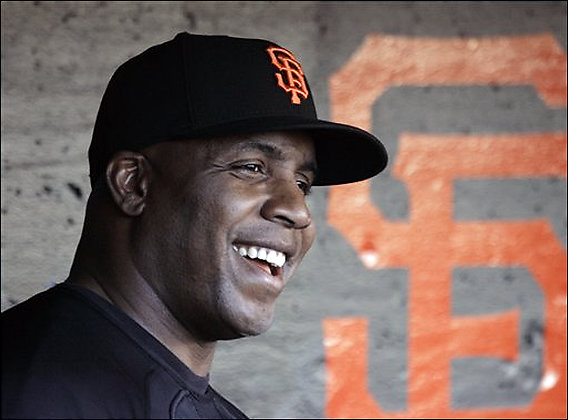
As tired and inadequate as the witch references may be in general, the concept of a witch trial is most appropriate when sizing up the situation faced by one Barry Bonds, he of the home run record and 1,000 moments of terror for sports writers. The crime Bonds is being pilloried for today is lying to a grand jury, when the opportunity for "immunity" was presented should he offer any testimony that would be self-incriminating. But, considering that what he said that day was going to become public knowledge, he was really faced with a witch's "water test": If he confessed to a crime everyone had already assumed him guilty of, then he would be finished. If he maintained his innocence — honestly or not — then he would face the punishment nonetheless.
If the body floats, it's a witch. If the body sinks, it's not a witch. Live guilty, or die innocent.
The prosecutor was already armed with evidence that Bonds was a customer of
BALCO, and had in the process of his patronage obtained anabolic steroids and a series of other performance-enhancing drugs from
BALCO honcho Victor
Conte. He was also armed with enough evidence to indict
Conte as it was; the use of Bonds, Jason
Giambi and a handful of other professional athletes amounted to, at best, piling on, and at worst a dog and pony show for — supposedly — the benefit of those in attendance, and those in attendance only.
That last part is what we're most concerned with, at this moment. Grand juries exist to allow prosecutors to, in theory, test the viability of a case they wish to bring to trial. In reality, grand juries exist to strengthen a prosecutor's case by virtue of an indictment that is granted in a closed proceeding without the benefit of judges, the defendant, or lawyers for the defendant or any witnesses. It is not a stretch to suggest that what often takes place within a grand jury proceeding is nothing short of slander against a prospective defendant, which is why it's increasingly rare for a prosecutor to
not earn an indictment as a result of these patently farcical proceedings. Evidence that wouldn't see the light of day after discovery is fair game in a grand jury proceeding, and there's no limit to what a prosecutor can do to witnesses that he or she would otherwise be given a severe reprimand for repeating in an open court.
A prosecutor can also offer immunity to any witness, which in theory — sorry if I keep using this particular caveat as a rhetorical device — obviates the need for any witness to invoke his or her Fifth Amendment right to not be compelled to self-incriminate. Bonds, like the other
BALCO clients, was granted immunity in return for honest testimony, which in a lot of people's minds means that Bonds had no excuse to lie about his steroid use.
Bonds is a lot of things — megalomaniac, an asshole, selfish — but he's rarely been accused of being stupid. Nor, I suspect, are the members of his legal council. Anyone with half a brain could see the
BALCO grand jury for the circus it was, and
thusly had to understand two things about it:
1) It was a pointless exercise of
prosecutorial power, and;
2) There was absolutely
zero chance that testimony would remain secret.
Bonds, like every other athlete called to testify, had much more to worry about than the criminality of any actions they might admit to on that stand. Rarely are the users of "illegal" drugs like steroids convicted of anything more weighty than a misdemeanor; it's only ever the suppliers that need be concerned of serious jail time, and no one has ever accused Bonds of sharing his stash. But an admission to using steroids or other performance-enhancing drugs was nothing less than professional suicide, and in the case of almost every
BALCO client, that meant millions of dollars lost. Perhaps I am overly cynical, but I don't know many people who honor the "truth" — particularly when it's over such a petty crime, in the eyes of the law — enough to sacrifice that kind of money. In addition, Bonds stood close to the precipice of one of the greatest professional accomplishments any athlete could hope to accomplish, which meant he stood to lose both material wealth and athletic immortality. He had every reason to lie that day, seeing as the prosecutor's promise of confidentiality promised to be worthless, a belief borne out by the subsequent leak and publishing of that testimony in newspapers and
The Game of Shadows, a book that virtually re-wrote the rules about yellow sports journalism.
So, why did anyone expect him to tell the truth on the stand? Where's the benefit? Furthermore, how is the "greater good" served by his telling the truth in this situation? Even if you believe
Conte deserved to be locked up for his crimes, whatever Bonds said that day really didn't change things one way or the other. The player's "crime" didn't harm society; it harmed a game that had looked the other way for at least a decade as juiced ballplayers brought fans back into the seats and dollars back into the pockets of team owners (and, yes, the players themselves). The "crime" was against hopelessly naive fans who clung onto silly notions of athletic purity. And, if you really want to go left-field on this situation, Bonds' crime was against his "legacy," or "natural talent," or "respect for the game," ideas that shouldn't be uttered with a straight face. In truth, Bonds' only "crime" when it came to performance-enhancing drugs was that he shopped with the wrong distributor, or perhaps made his use a little to conspicuous. Perhaps that's a sign of poor forethought, but more than likely it's bad luck. Luck, and the fact that he was so unabashedly better than everyone else — even those juicing just as much — that the scope of every self-righteous, fame-hungry writer or federal prosecutor was aimed directly as his expanding head.
The real "crime" Bonds is being punished for — with this perjury indictment serving as proxy — is being unwilling to offer a lame, emasculating and humiliating "apology" like
Giambi (who only apologized after the testimony leaked; had it actually remained secret, he would still maintain his innocence) so the rest of us could feel superior for a day before moving on. Because this proud, arrogant athlete didn't prostrate himself, he is everything that's wrong with the game and should be fitted with shackles. Worse yet, now, and only now, that there's an federal indictment — as opposed to just reams of evidence, two books loudly proclaiming his guilt and a general consensus among everyone that he used
PEDs — he's suddenly untouchable, and will not be signed by a team this
offseason even though he's still one of the 20 best offensive players in the league and without question the best remaining offensive player on the market. How fucking capricious and hypocritical is that, baseball?
If Bonds goes to jail — he almost certainly won't, by the way, because it's virtually impossible to prove perjury in this particular situation — he
should be defiant on his
perp walk. The only shame that should be felt is by those who think that what's taking place right now is anything except a travesty and embarrassment. Athletes who have killed people, or been party to a murder — hello there, Ray Lewis and Leonard Little! — received nowhere close to the self-congratulatory bile that's filled sports pages the last three years every time the subject is Barry Bonds. One wonders if the fan reaction to
Pac-Man Jones the next time he steps on a field of play will compare to anything Bonds received last season on the road.
I'm not saying that what Bonds did was right — taking steroids
or lying to the grand jury — nor should anyone "defending" Bonds have to say as much. But I'm not going to pretend that either infraction is anywhere close to deserving of the punishment he's already received, not to mention the punishment he possibly could receive down the road. Nor am I going to give the hyper-moralists a pass, particularly when almost every one of them have done things in their life to further their careers or contribute to their personal wealth — embellishing resumes, backstabbing co-workers, dodging taxes — that are no better or worse than what Bonds did. There are
real criminals in sports that are much more deserving of our hatred, but most of them are lucky(?) enough to not be so good that the mixture of misdeed on their part and jealousy on everyone
else's part proves potent enough to fire up a crooked trial.
I finish with a question: Do you
really feel better now that Bonds has been ruined?